

Levers, Work, and Spiritual Leverage
Our fourth lesson from Teacher Time Machine

“Give me a place to stand, and a lever long enough, and I will move the world.”
Archimedes
For teachers who want help creating high-quality lessons that truly reflect a Catholic worldview, Teacher Time Machine is a powerful support. An AI lesson planning platform that supports teachers in designing curriculum-aligned lessons that are intentionally faith-permeated, it allows Catholic educators to integrate Church teachings, Scripture, and Gospel values directly into their planning using a backward design approach, ensuring lessons are academically sound, mission-driven, and responsive to the needs of their students. Teacher Time Machine helps educators design faith-permeated, curriculum-aligned lessons while keeping teacher expertise and classroom context at the center of the process. Try it free at
https://new.teachertimemachine.com/
Grade 7–8 Science
Theme: Levers, Work, and Spiritual Leverage
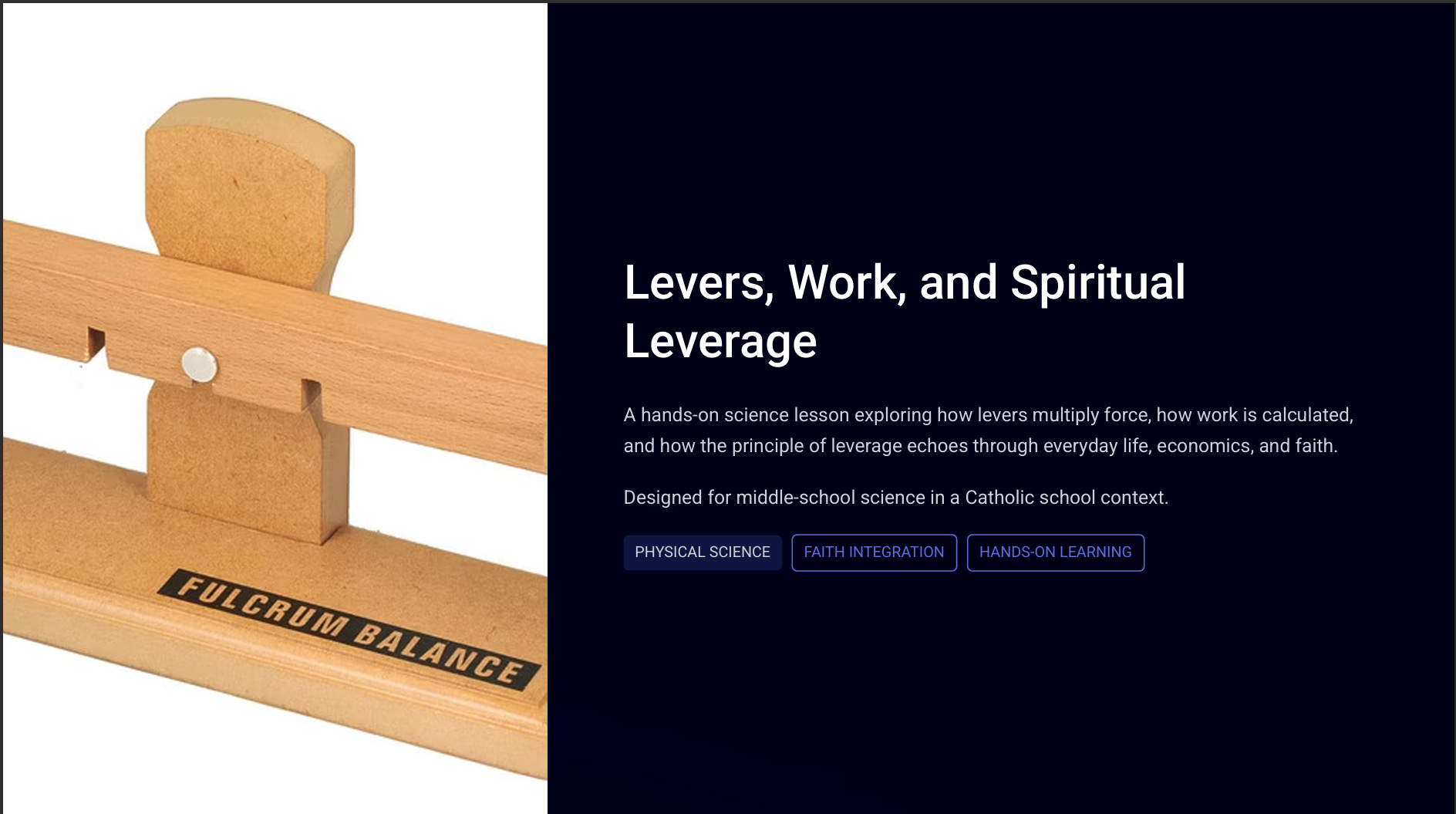
This lesson explores one of the most surprising and powerful ideas in science: small inputs can produce surprisingly large effects. Through hands-on investigation, students discover how levers multiply force, how work is calculated, and why every machine involves a trade-off between force and distance.
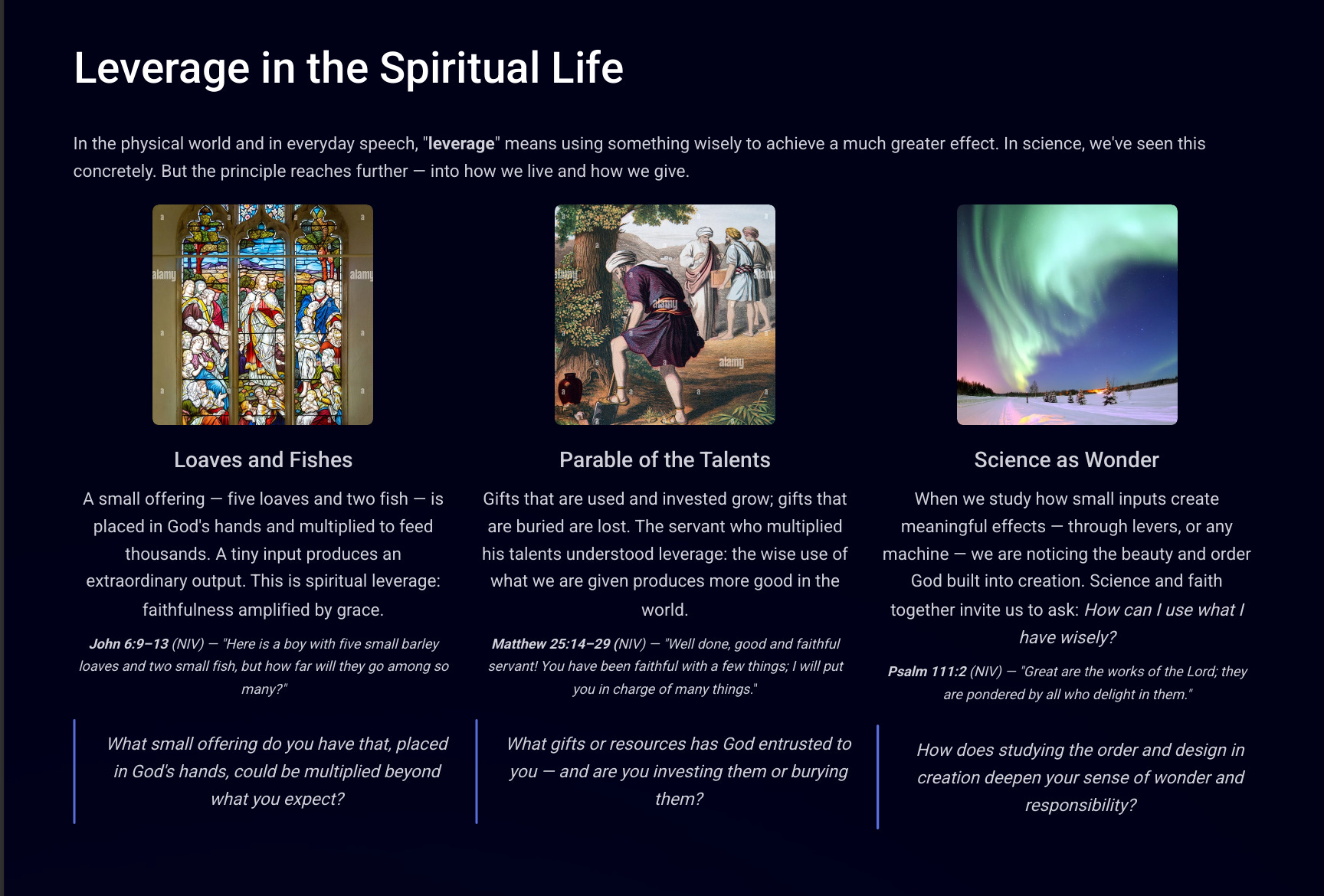
But leverage is more than a scientific principle. It shows up in our understanding of economics, generosity, stewardship, and faith. As students investigate how simple machines amplify effort, they are invited to consider how small actions, wisely applied, can have effects far beyond what might first seem possible.
What students will explore:
• How levers reduce the force needed to move a load
• The relationship between force, distance, and mechanical advantage
• Why machines do not create energy but transfer and transform it
• How work is calculated using force and distance
• The difference between ideal machines and real-world systems
• How the principle of leverage appears in everyday life, economics, and faith
• Why small acts of generosity, stewardship, and faithfulness can produce lasting impact
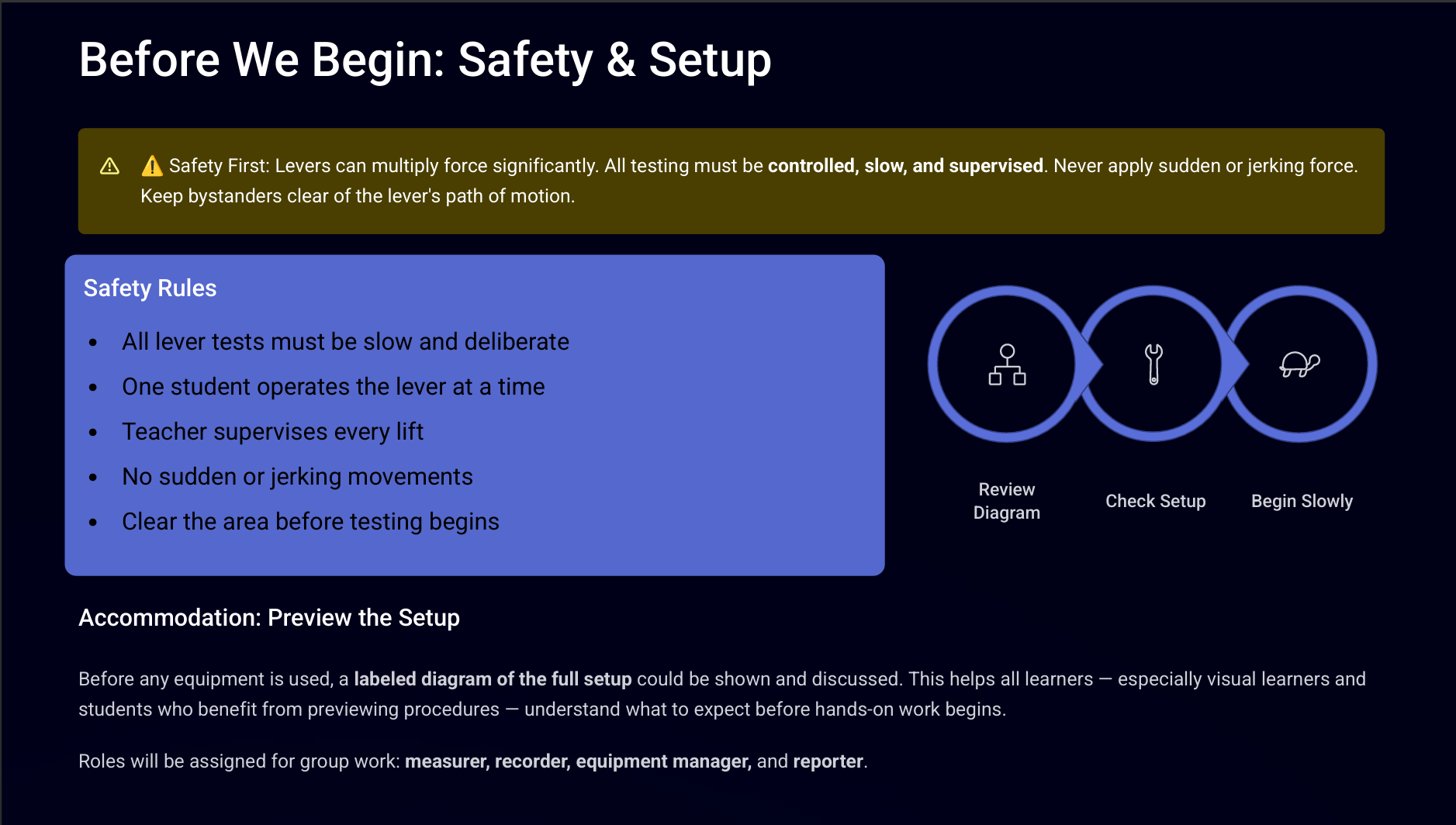
In the full lesson, you’ll find:
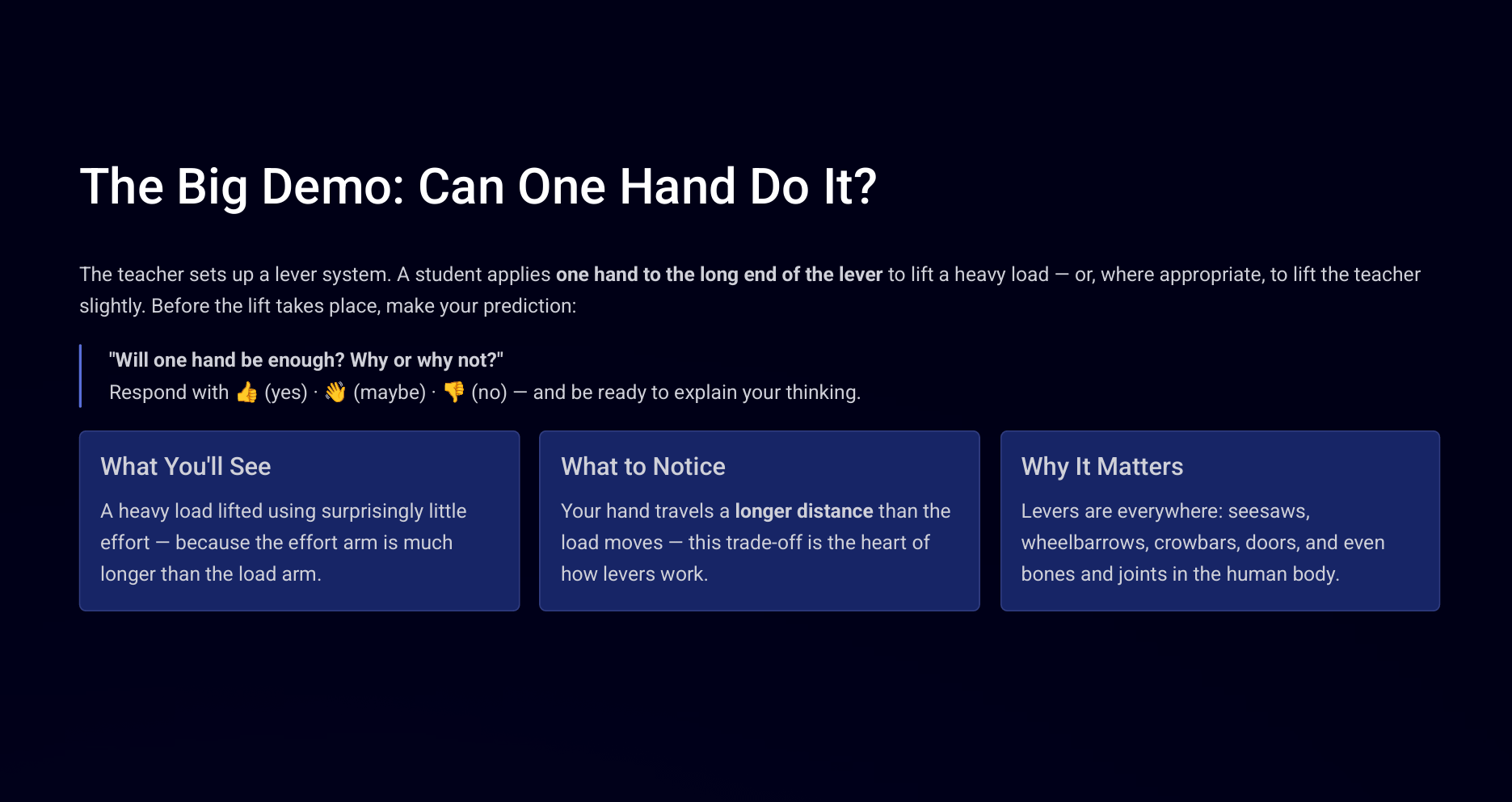
• A memorable demonstration showing how a single hand can lift a surprisingly heavy load
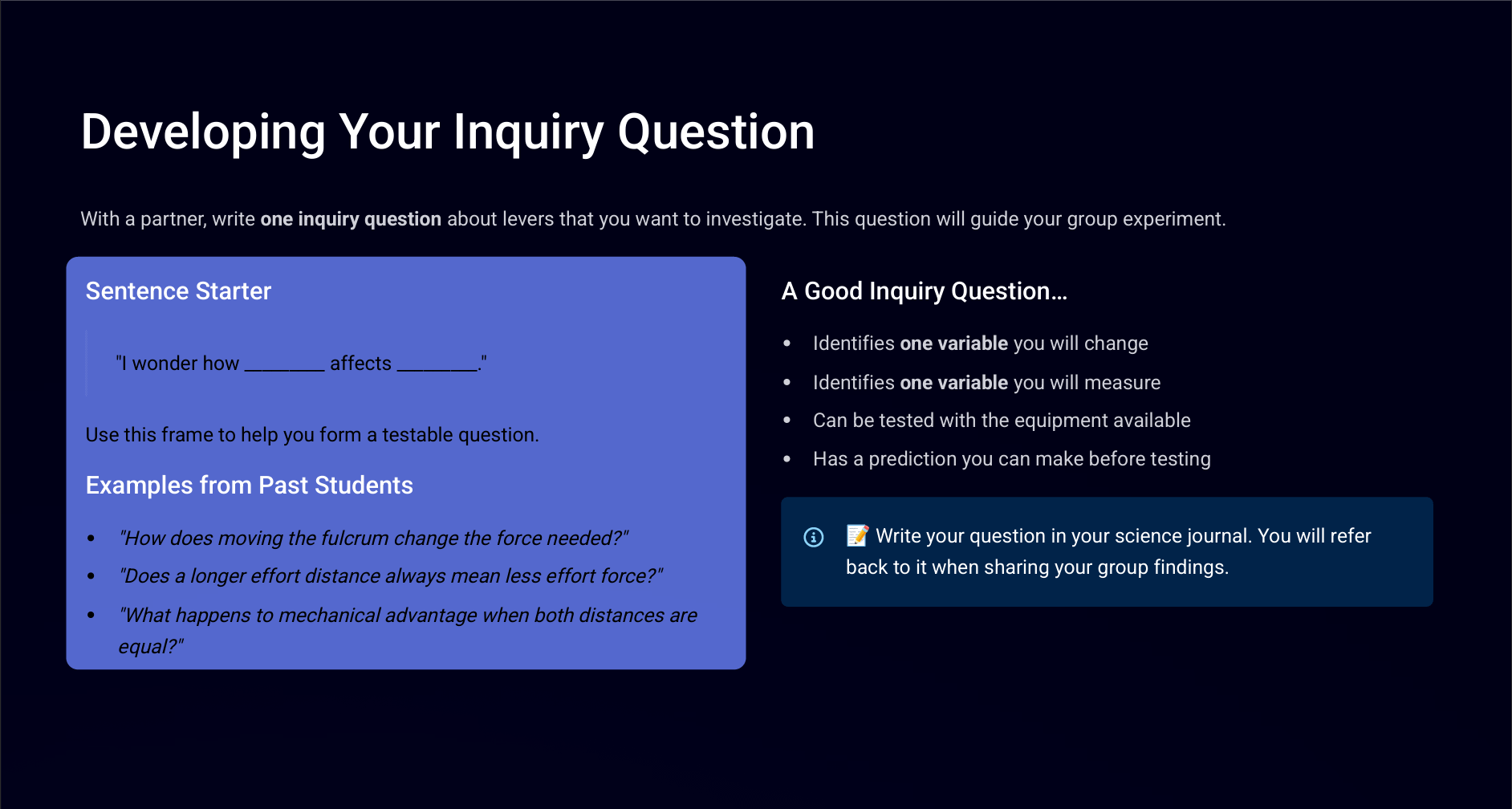
• Collaborative investigations where students test different fulcrum positions and collect real data
• Guided practice calculating mechanical advantage, work input, and work output
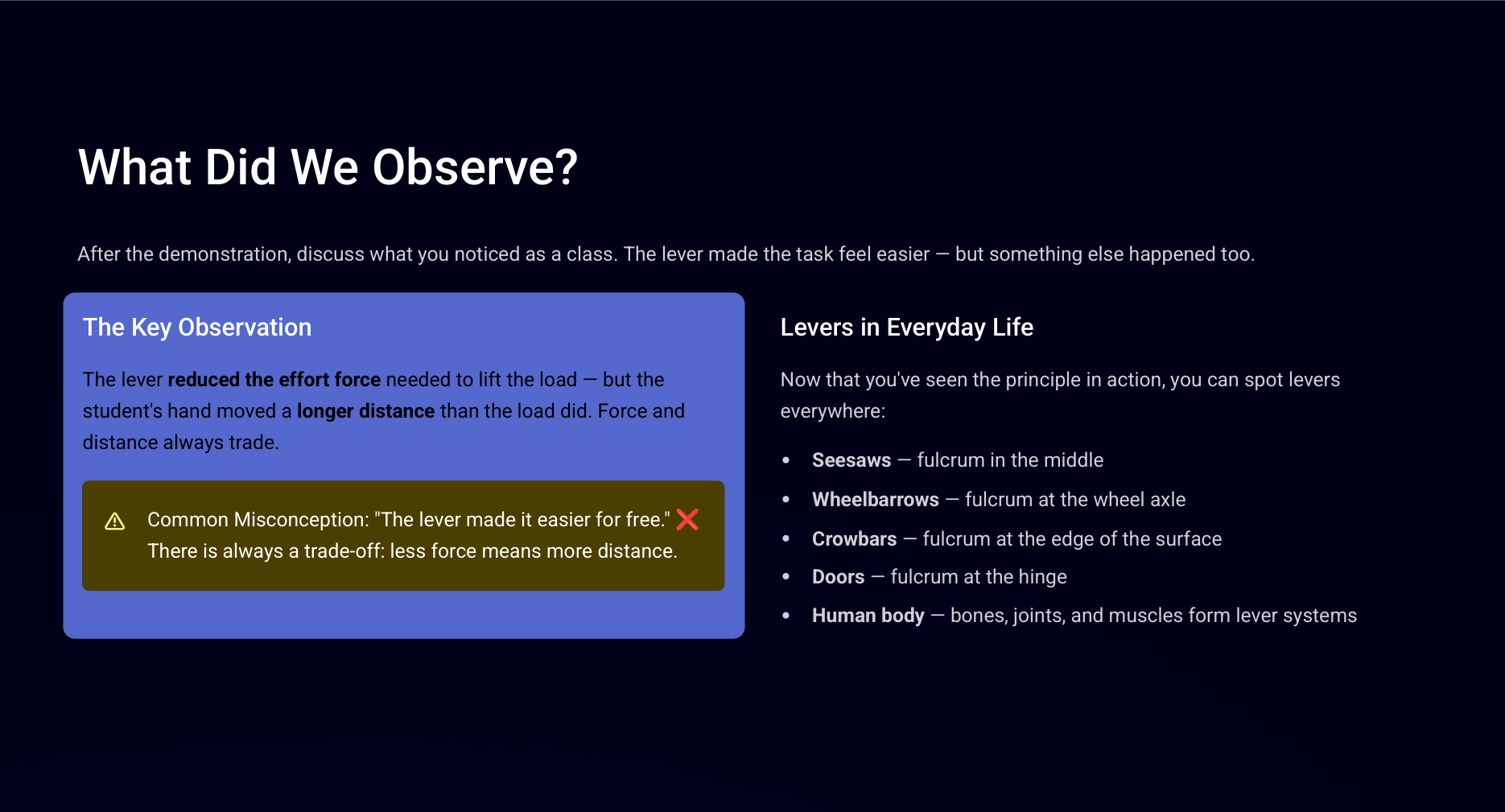
• Discussion prompts that address common misconceptions about force, energy, and machines
• Faith-integrated reflections connecting physical leverage to the Loaves and Fishes, the Parable of the Talents, and Christian stewardship
• A real-world case study exploring how small investments can create significant social and economic change
• Journal reflections and inquiry activities that help students connect scientific principles to broader questions about responsibility, generosity, and the wise use of gifts
By the end of the lesson, students will understand that leverage is not about getting something for nothing. Whether in science, economics, or faith, greater impact always involves wise use of resources, thoughtful effort, and an appreciation for the remarkable ways small inputs can produce meaningful outcomes.
