
Self Portraits and the Trinity
An Art Lesson for any age, by Dr. Brett Fawcett

Art offers a powerful way to help students understand how God reveals Himself—and how human creativity participates in that revelation. This lesson uses self-portraits and world-building art projects to explore the Trinity, revelation, and human creativity in a way that is concrete, imaginative, and developmentally flexible.
The Solemnity of the Most Holy Trinity falls on May 31 this year. It would be extra helpful to complete this project the week before or after Trinity Sunday and tie it in with the readings of that feast.
Dr. Fawcett and I had a quick chat to discuss this lesson plan in order to provide you with an extra resource when preparing it, in case it felt a little theologically challenging. Check it out here:
The lesson below has been formatted for Substack. You can download Dr. Fawcett’s original version (for easy printing, etc.) here:

The Art of the Father
Jesus Christ is the perfect picture of His Father. Hebrews 1:3 puts it this way, in different translations:
“The Son is the radiance of God’s glory and the exact representation of his being” (NIV)
“He is the radiance of the glory of God and the exact imprint of his nature” (NRSV)
“Who being the brightness of his glory, and the express image of his person” (NKJV)
Colossians 1:15 also calls Jesus “the image of the invisible God,” and Jesus says, “He who has seen Me has seen the Father” (John 14:9).
If you want to know what God is like, look at Jesus.
The Son is like God’s eternal self-portrait. For this reason (and others), St. Augustine calls Jesus the art of the Father (Ars Patris).
Art Tells Us About the Artist
Thinking about this reminds us of how art always reveals something about the artist who made it. St. Thomas Aquinas often said that every effect is similar to its cause.
For that reason, theologians have recognized that everything in creation must have some kind of resemblance to God. After all:
Every creature was made by God
A piece of art always reflects something about the artist
Therefore, everything in the universe must “look like” God in some way
(This idea is often called the analogy of being.)
Source: serenityandhealth.com
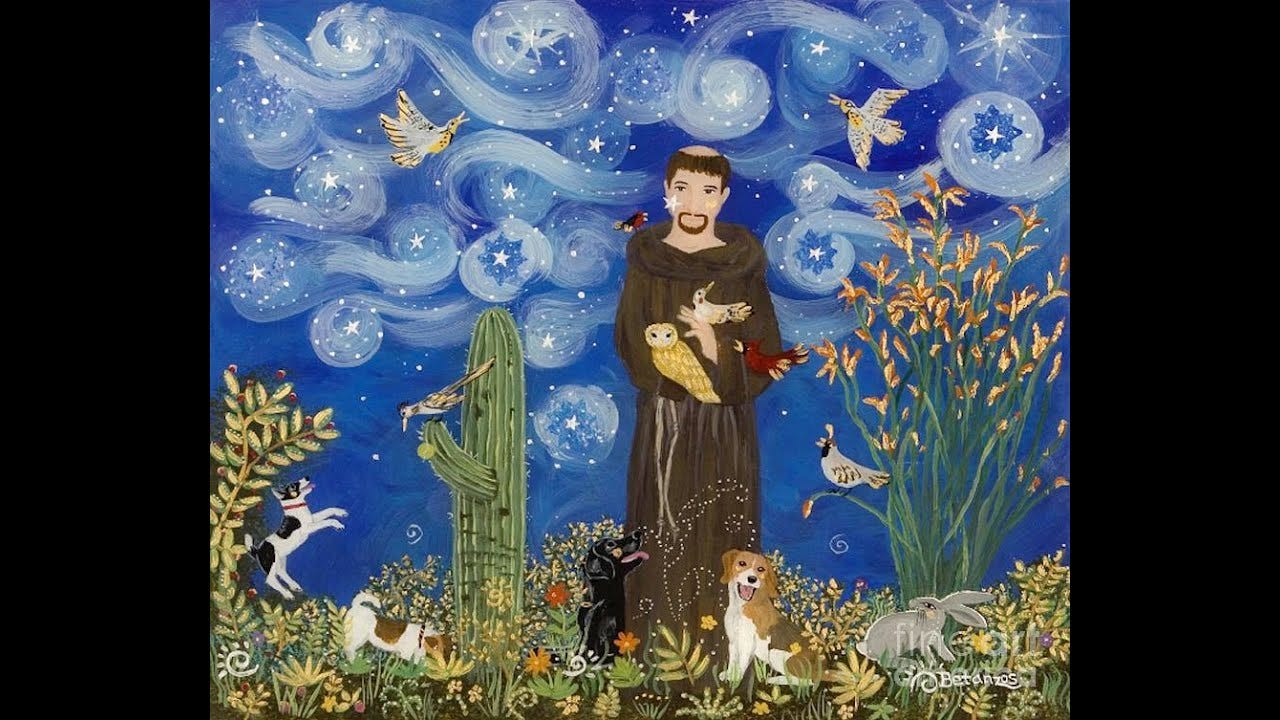
St. Francis of Assisi understood this well—his Canticle of the Creatures beautifully compares the sun, wind, water, and earth to God. This is what theologians call general (or natural) revelation: God shows something about Himself to all people through creation.
Human Creativity and the Image of God
There is something special about us.
Scripture tells us that humans are made in the image of God (Genesis 1:26–27; James 3:6). This means many things, but a key part is that—like God—we are creative. We can make new things. Art is a clear example of this.
Just as God creates a universe that reveals something about Himself, we create art that reveals something about ourselves.
And God is most clearly revealed in the art of the Father—His eternal self-portrait, Jesus Christ. God’s self-revelation in the Incarnation is called special (or supernatural) revelation.
Helping Students Understand This
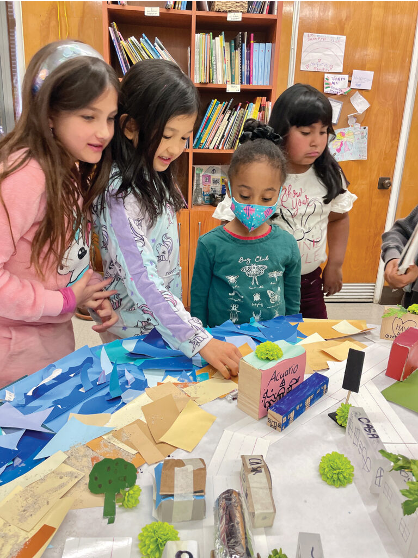
One way to teach this is to have students create their own world. “World” can mean many things depending on age level, but the core idea is simple:
students create a small universe or planet using any medium—painting, sculpture, collage, or digital design.
Source: rethinkingschools.org
Afterward, have students write or record a reflection on what their art reveals about themselves.
Possible prompts:
What do you like?
What colours did you choose, and why?
What places do you love or want to visit?
What patterns or themes keep showing up?
If appropriate, students can look at one another’s worlds and reflect on what they learn about the artist from the artwork.
This helps students see clearly: art reveals the artist.
Reflection: What the World Reveals About God
Once that connection is made, have students reflect on what the real world tells us about God, the Artist who created it.
For example:
The universe appears orderly and rational—what does that suggest about God?
The earth is finely suited for life—what does that suggest about God’s care for us?
If appropriate, this can include a discussion of the Anthropic Principle, which notes how “fine-tuned” the universe appears to be for life.
This also makes a strong cross-curricular connection to science. Students can examine animals, plants, or natural phenomena and reflect on what these reveal about God. Reading and discussing the Canticle of the Creatures works well here, and students might create art inspired by its imagery.
The Special Revelation of a Self-Portrait
Once students understand art as self-revelation—and God’s general revelation through creation—you can move into special revelation.
Activity 2: Self-Portraits
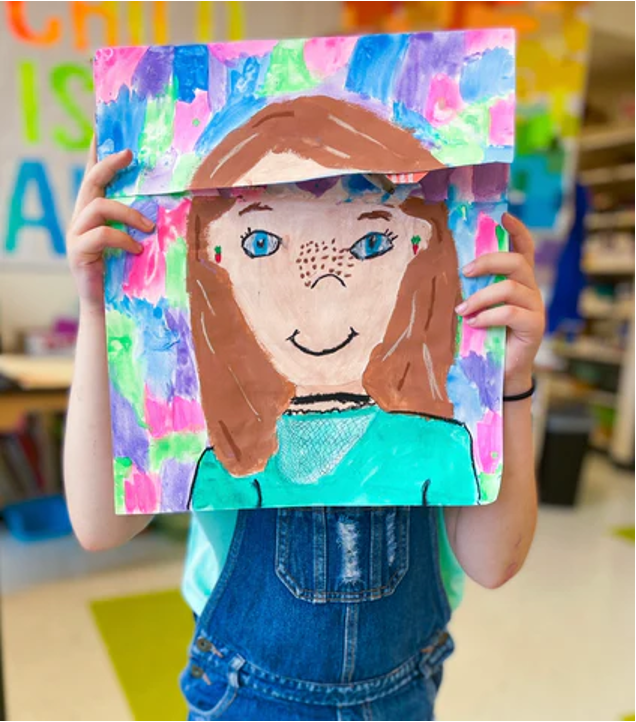
Have students create self-portraits, helping them be as careful and accurate as possible
Source: artwithmrse.com
Research shows that making self-portraits—especially for younger students—supports identity formation. Using natural materials (leaves, sticks, etc.) can also connect this activity back to creation.
Afterward, students again reflect:
What does this portrait reveal about me?
How do my stylistic choices express how I see myself?
With older students, this can become sensitive, so it should be handled prayerfully and with care.
Beyond psychological benefits, this activity:
Helps students appreciate their own bodies and faces
Invites reflection on God as Creator
Can be paired with prayer as students work
Teaching the Trinity Through Art
Once these foundations are laid, this becomes a powerful way to teach the Trinity.
Remind students:
Jesus is God’s eternal self-portrait
The Son never came into existence—He is eternally begotten
In discussion, explore questions like:
If my self-portrait reveals something about me, what do Jesus’ words, actions, miracles, Death, and Resurrection reveal about the Father?
What does Jesus show us about the Father’s heart?
As Hans Urs von Balthasar famously said: “Everything about Jesus is Word.”
You can also connect this to the Trinity by noting that the love and delight students feel when looking at their self-portraits is an analogy for the Father’s love for the Son—a love that is the procession of the Holy Spirit.
Visio Divina and Sacred Looking
With this groundwork in place, introduce visio divina (“sacred looking”).
This involves prayerfully contemplating holy art.
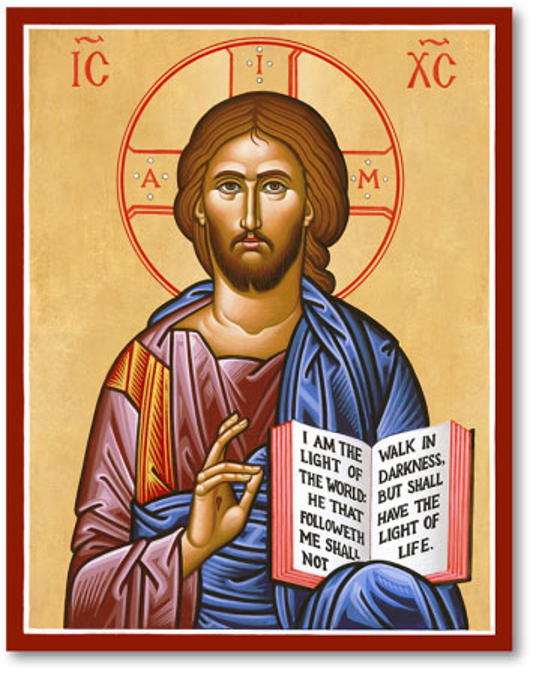
Christ the Teacher icon
Source: monasteryicons.com
A strong activity here is to show students icons from the Eastern Christian tradition and explain:
How they are created prayerfully and intentionally
How they function as “windows” into divine reality
Icons such as:
Christ the Pantocrator
Our Lady of Perpetual Help
The Anastasis
Andrei Rublev’s Trinity
…are excellent examples to pray with, after explaining their symbolism.
Icons are, in a sense, portraits of the self-portrait—images of Christ, who is the image of the Father.
Conclusion: Art Offered Back to God
Conclude by reminding students that our ability to create comes from God. It is a participation in His creative power because we are made in His image.
Therefore, our art should be offered back to Him.
“Whatever you do, do to the glory of God” (1 Corinthians 10:31)
Doing art for God helps students understand that their value—and the value of what they create—does not depend on approval or praise, but on God’s love.
The poet Gerard Manley Hopkins once wrote that the only audience that truly matters is Christ:
“The only just judge, the only just literary critic, is Christ, who prizes, is proud of, and admires, more than any man, more than the receiver himself can, the gifts of His own making.”